How to Choose the Perfect Wall Art for Every Room in Your Home
You have moved into a new place, renovated a room, or just noticed that your walls feel empty. You know you want wall art, but the options are overwhelming — prints, paintings, photographs, murals, abstract, realistic, large, small. Where do you start?
As an artist who has created hundreds of custom pieces for homes across Canada, I have seen what works and what does not. This guide will walk you through choosing wall art that looks intentional, feels personal, and transforms your space — room by room.
Start With These 5 Principles
Before you choose a single piece, these fundamentals will save you from expensive mistakes:
1. Size Matters More Than You Think
The most common mistake I see is art that is too small for the wall. A tiny frame on a large empty wall looks like an afterthought. Here is a simple rule: your art should fill 60 to 75 percent of the available wall space. When hanging above furniture, the art should be roughly two-thirds the width of the furniture below it.
| Placement | Recommended Art Size | Example |
|---|---|---|
| Above a sofa (84") | 48" - 56" wide | Large canvas painting |
| Above a bed (queen) | 40" - 50" wide | Landscape or abstract |
| Above a console table | 24" - 36" wide | Portrait or still life |
| Small accent wall | 16" - 24" wide | Gallery wall or single piece |
| Stairway wall | Multiple 8" - 16" pieces | Gallery arrangement |
| Large empty wall | 36" - 60"+ wide | Statement painting or mural |
2. Colour Is a Conversation, Not a Match
Your art does not need to match your sofa cushions. In fact, art that matches too perfectly looks like it came bundled with the furniture. Instead, pick one or two accent colours from the room and look for art that includes those tones alongside something unexpected. A warm-toned painting against a cool grey wall creates depth. A pop of colour in a neutral room becomes a focal point.
3. Eye-Level Is the Only Rule for Height
Hang the centre of the artwork at 57 to 60 inches from the floor — this is gallery standard and matches average eye level. Above furniture, leave 6 to 8 inches between the top of the piece and the bottom of the frame. Too high and the art feels disconnected from the room; too low and it looks cramped.
4. Mix Mediums, Not Randomly
A room with only prints feels flat. A room with only oil paintings can feel heavy. The best-looking spaces mix mediums thoughtfully — perhaps a large canvas painting as the anchor, paired with a pencil drawing or a photograph on an adjacent wall. The key is having one dominant piece and letting everything else support it.
5. Choose Art That Means Something to You
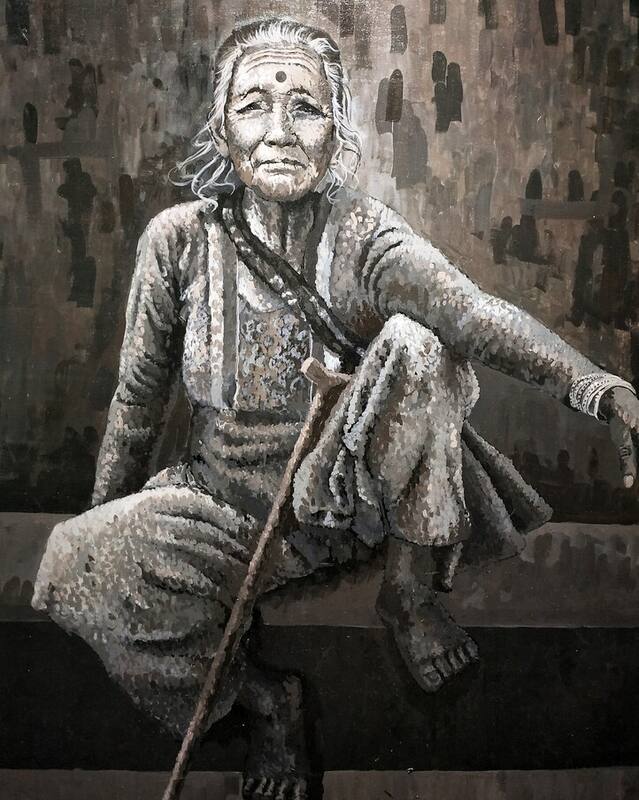
Trendy art loses its appeal in two years. A painting that connects to a memory, a place you love, or a story you want to tell never gets old. Some of my favourite commissions have been portraits of grandparents, paintings of childhood homes, and scenes from meaningful trips. That personal connection is what separates a decorated house from a home.
Room-by-Room Guide
Living Room — The Statement Piece
Your living room is where guests form their first impression. This is the place for your most striking piece — a large canvas painting, a bold portrait, or an eye-catching abstract. Position it above the sofa or on the focal wall opposite the entrance.
Best art types: Large oil or acrylic paintings, custom portraits, oversized abstracts, wall murals for open-concept spaces.
Bedroom — Calm and Personal
The bedroom should feel restful. Choose art with soft tones, gentle textures, and personal meaning. A landscape, a muted abstract, or a portrait of a loved one works beautifully above the headboard. Avoid anything too stimulating or busy — you will be looking at it every night before sleep.
Best art types: Watercolour landscapes, soft pencil portraits, abstract art in earthy or pastel tones.
Home Office — Inspiring Without Distracting
Your office art should motivate you without pulling your attention. Avoid hanging art directly in your line of sight while working. Instead, place it on a side wall or behind your desk (visible on video calls). Detailed drawings, cityscapes, or nature scenes work well.
Best art types: Detailed pencil drawings, architectural sketches, nature photography, motivational typography.
Dining Room — Conversation Starter
Dining rooms are social spaces. The art should be interesting enough to spark conversation but not so graphic that it competes with dinner. Still life paintings, food-related art, landscapes, and cultural pieces all work well. Go large — a dining room with a single dramatic painting feels intentional and sophisticated.
Best art types: Large oil paintings, cultural art, nature scenes, still life compositions.
Hallway and Entryway — First Impressions
Narrow spaces benefit from a gallery wall arrangement — a curated set of smaller pieces that tell a story as you walk past. Mix family photos with original art and drawings. For entryways, a single impactful piece sets the tone for the entire home.
Best art types: Gallery wall arrangements, small to medium drawings, portrait series, mixed media.
Children's Room — Playful and Adaptable
Kids' rooms evolve fast. Consider a hand-painted mural that can grow with them — a nature scene or storybook landscape works from toddler years through early teens. For flexibility, use easily swappable framed prints alongside one permanent painted element.
Best art types: Wall murals, illustrated prints, custom name art, nature scenes.
Original Art vs. Prints: What Is Worth It?
Let me be honest — I am an artist who creates originals, so I have a bias. But here are the objective differences:
Prints are affordable, easy to replace, and available instantly. They are perfect for rental spaces, rooms you redecorate often, or areas with high moisture (bathrooms, laundry rooms). A quality framed print can look great.
Original art has texture you can feel, details that shift in different lighting, and a presence that prints cannot replicate. It holds value, often appreciates over time, and carries the story of how it was made. For rooms you live in daily — living room, bedroom, dining room — original art is worth the investment.
A custom painting is not just decoration. It is the only thing in your home that was made specifically for you, by hand, with intention. That is something no print shop can offer.
The sweet spot for most people: original art in the main living spaces, quality prints in secondary rooms. This gives your home character without stretching your budget.
How to Commission Art That Fits Perfectly
The biggest advantage of commissioning custom art is that it is made for your exact space. Here is how to get it right:
- Measure your wall and furniture first. Take a photo of the wall with a measuring tape visible. Send it to your artist so they can recommend the ideal canvas size.
- Share your colour palette. A photo of the room in natural light tells an artist everything they need to know about what tones will work.
- Describe the feeling, not just the subject. Saying "I want something calming with warm earth tones" is more useful than "paint me a tree." The mood matters more than the object.
- Ask for a sketch before the final piece. Any good artist will provide a preliminary sketch for your approval. This is when changes are easy — not after the painting is finished.
- Trust the artist's eye. You hired them for their skill. If they suggest a different size or composition, hear them out — they see things from a trained perspective.
Looking for the Perfect Piece for Your Space?
I create custom paintings, portraits, and wall murals tailored to your home. Tell me about your space and I will help you find the right art.
Get a Free QuoteFrequently Asked Questions
What size wall art should I get for my living room?
For above a sofa, your art should be roughly two-thirds the width of the sofa. For a standard 84-inch sofa, aim for a piece that is 48 to 56 inches wide. If hanging on an empty wall, the art should fill about 60 to 75 percent of the available wall space.
Should wall art match the room's colour scheme?
Art does not need to match your decor exactly. Instead, pick one or two accent colours from the room and look for art that includes those tones. Contrast is more interesting than a perfect match — a bold painting against neutral walls creates a focal point.
Is original art worth the investment compared to prints?
Original art holds and often increases in value over time, unlike mass-produced prints. A custom painting also carries personal meaning and one-of-a-kind texture that prints cannot replicate. For pieces you will live with daily, original art is worth the investment.
How high should I hang wall art?
The centre of the artwork should be at eye level, which is approximately 57 to 60 inches from the floor. When hanging above furniture like a sofa or console, leave 6 to 8 inches of space between the top of the furniture and the bottom of the frame.
What type of wall art is best for a bedroom?
Bedrooms benefit from calming, personal artwork — soft landscapes, abstract pieces in muted tones, or a meaningful portrait. Avoid overly bright or busy compositions. A large piece above the headboard or a pair of smaller works on either side creates a balanced, restful space.
Can I commission custom wall art to fit a specific space?
Yes. A commissioned piece is painted to your exact size requirements, colour preferences, and style. This guarantees a perfect fit for your wall and a one-of-a-kind work that reflects your personality. Most artists offer free consultations before starting.
Final Thoughts
Choosing wall art is not about following trends or filling empty space — it is about creating a home that reflects who you are. Start with one room, one piece that speaks to you, and build from there. The best interiors are not decorated in a weekend; they are curated over time with intention.
If you are not sure where to start, reach out. I am happy to look at photos of your space and recommend what would work — no obligation, just an artist's honest opinion.